Simon and Garfunkel – Bridge Over Troubled Water – Production Analysis
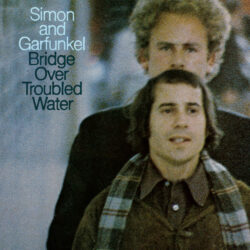 Album: Bridge Over Troubled Water
- Writer: Paul Simon
- Producer: Roy Halee, Paul Simon, Art Garfunkel
- Released: 1970
- Genre: Folk rock, gospel
- Length: 4:55
“Bridge Over Troubled Water” received no less than six Grammy Awards in 1971! “Bridge Over Troubled Water” is a great piece of folk rock history. The song is hymn-like in structure but it is the constant build of arrangement that makes it so epic.
Song Structure
The simplicity of the song structure is contrasted by the arrangement. It starts off very quiet and creeps up on you, with every part of the song more intense than the one before.
“Bridge Over Troubled Water” has the simplest of all the structures, a simple verse that repeats itself three times. But what makes the song so strong is the use of the refrain and the increased musical intensity of each verse.
It’s all about the instrumentation that makes this song different. The first verse and accompanying refrain is very quiet and somber. In the second verse Art Garfunkel sings with a little more power before the next refrain opens up with even more power, especially on the vocal side.
Just compare the “…like a bridge over troubled water…” part of the second verse with the first one to see the difference in dynamics. In addition, as the second refrain finishes we are introduced to additional instruments. These instruments create a buildup towards the end of the song, creating a very epic final refrain with strings, percussion hits and all.
Even before the final third verse, there is a dynamic change between the big end of the second refrain. This creates even more contrast to the second verse and what is coming up ahead. If they would have held the dynamics of the cymbal hits in the second verse the finale would not have sounded as big. Creating contrast and dynamics by comparison such as this is a great way to make things sound bigger.
Arrangement
Supposedly, this song was originally written on guitar. I’m glad it didn’t stay that way because the piano part is what gives this song its character. It just means that your instrument of choice for songwriting isn’t necessarily the one that will eventually work for the song.
If you write songs on guitar it might be easy for you to come up with the chords and the melody that way, but think about the different ways a song can take shape if you use different lead instruments.
A pop song written on piano could work well as a guitar riff instead, just like “Bridge over Troubled Water” transforms when it’s played on piano.
Foundation
Everything revolves around the chord structure and vocal so it’s no surprise the piano takes such a big part of the production.
There really isn’t any drumbeat per say until the very end of the song. The rhythm is held by the piano until the cymbal crashes in the second refrain.
An interesting engineering trick was that the snare hits in the end were slowed down to make them sound thicker. They first sped up the backing track of the song during the recording of the drums. Then when they slowed everything back down again the thickness of the drums increased because it was pitched down.
Melody
The importance of this melody is a no-brainer. The vocal melody is so strong and memorable there’s no wonder it won a Grammy. However, in keeping with the ever expanding build of the song, the third verse is not only harmonized but the vocals are also doubled to give them a thicker sound.
From an engineering and mixing standpoint, adding contrast to the vocals like this makes a lot of sense. If you want to create a build-up such as this you need to constantly add or subtract production elements.
In this case, there is the constant addition of elements, from a lonely vocal that gets more powerful as the song progresses until finally it’s doubled and harmonized to create an even bigger dynamic change.
Orchestra
During the “Sail on Silvergirl” part the orchestra starts kicking in, building up the song to epic proportions. It’s this wall of sound type feel they could achieve with a big orchestral arrangement to build on top of the lonely piano part.
Here’s a breakdown of the buildup elements:
- Intro – The simple piano motif
- Verse – Piano and soft vocal.
- Refrain – Continued piano with vocal singing softly. The piano continues into the next verse.
- Verse – Now we have a simple pad-like instrument, an organ of some sorts accompanying the piano and vocal.
- Refrain II – The piano part picks up in power while Garfunkel sings more intensely, adding extra dynamics to differentiate itself from the refrain before. The cymbal hits finish off the refrain, giving the listener a hint of the epic finale yet to come. And as I said before, the song still calms down a bit before the third verse just to give it some added contrast.
- Verse – The vocals really pick up in this one, with the doubled harmonized vocal giving the listener something completely different than before. The bass enters along with the galloping drums. The military snare hits in the far background gives the verse an added dimension of space.
- Final Refrain – The drum kit picks up into a steady drum beat, far back in the song. The vocals intensify even further and the orchestra gives the final refrain an epic feel, finishing up the buildup that has been lasting the whole song.
Key Take-Aways
The power of melody – The vocal and melody is the most memorable part of every song. Whether it’s folk from the ’70s or EDM from the 2000s, the melody always captures our attention. The chords don’t have to be complex and the song doesn’t need 7 different parts to make it interesting.
What a song always needs is a memorable melody that people can relate to. The song was originally only two verses but to make the song even bigger they created a third verse with harmonies. This part of the song might be one of the most memorable part of the song, as the “sail on silver girl” part really punches the song to greater heights than the simple piano song it had been until that point.
So don’t be afraid of simplicity. You can do a lot to make simple songs sound interesting without overcomplicating anything. Sometimes it’s as simple as adding a harmony, a doubled vocal part or background vocals to support the main melody.
Contrast – “Bridge Over Troubled Water” is a simple song. The way they create interest is through contrast and dynamics. It is not through complex song structure or complex chordal changes(although that piano part is very elaborate).
No, it is by constantly adding more to the song, building it up into something big and powerful. If they had left the song as a 2 verse, 2 refrain piano hymn it probably would have bombed. But with a simple, but clever production and instrumental arrangement it became something great.
Something great enough to win a Grammy.
Further Reading
I hope you enjoyed this musical analysis of Bridge Over Troubled Water.
And if you’re recording music in your home studio that you need mixed, please check out the step-by-step mixing process right here.
