Three Tips to Get the Best Architectural Acoustics
The term acoustics often conjures images of recording studios or grand performance venues. And while acoustics and the physics of sound are essential for any venue, the acoustic properties of any setting can directly impact more than what you hear. Noise-polluted offices can tank productivity and cause unneeded stress. And audio recorders need to maximize their spaces for sound production.
But how?
Following the words of professional recording artists and studio, wizards is a great place to start. But, achieving your ultimate sound production will require understanding a bit of physics.
To be precise, we mean understanding architectural acoustics. While it may sound dry, the term represents critical knowledge that anyone familiar with sound, recording, and mixing needs to know. Specifically, how the construction, materials, and layout of a room affect how sounds, well, sound!
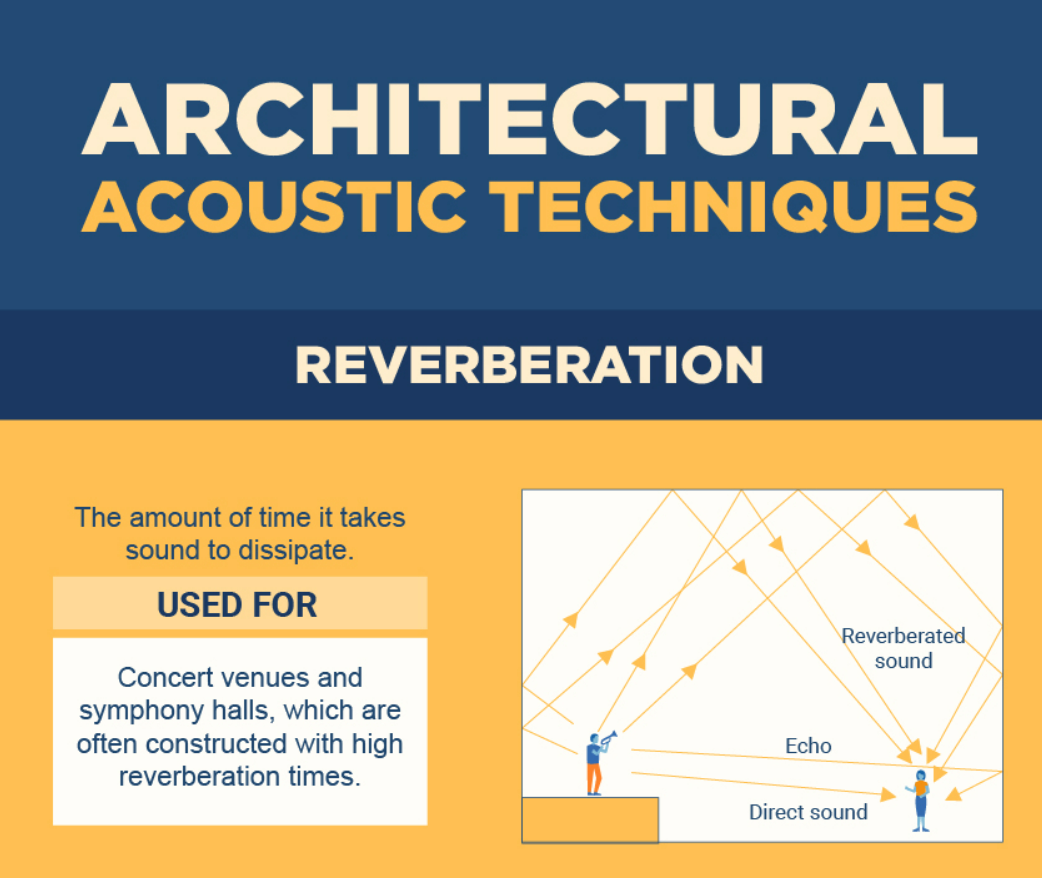
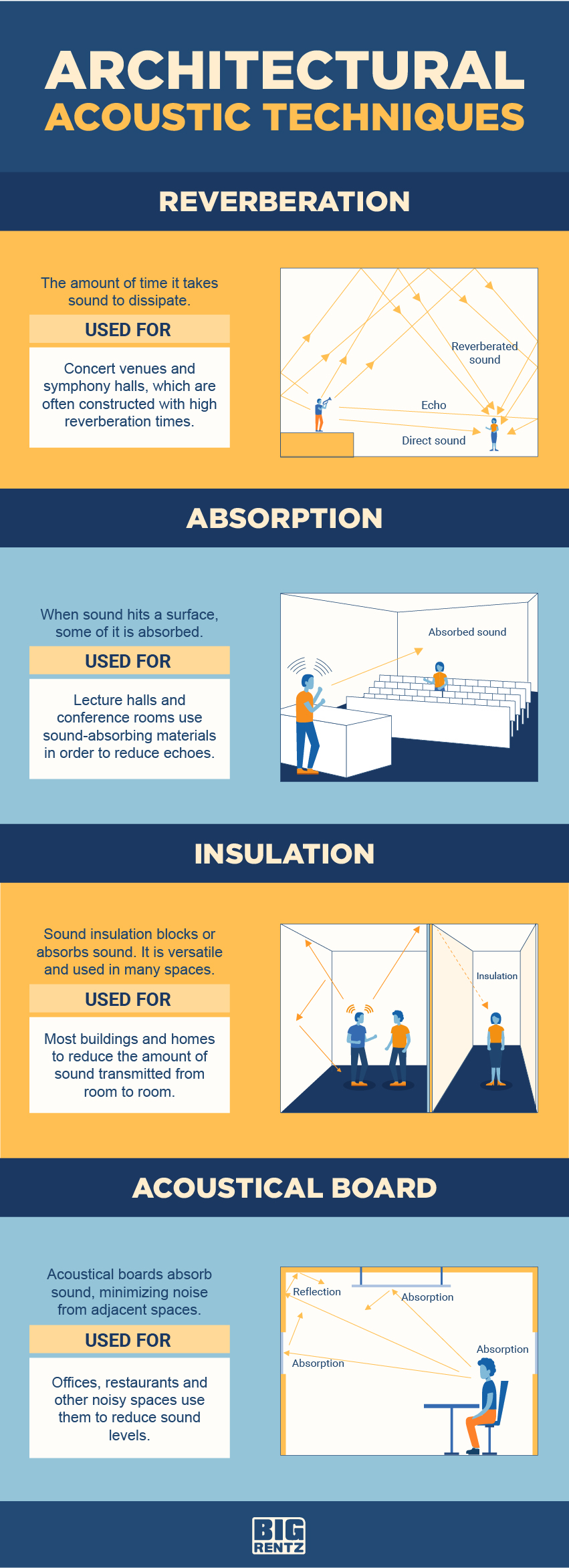
Fortunately, the cornerstones of architectural acoustics—reverberation, absorption, and insulation—are things you already deal with every day.
So, if you’ve found yourself trying to hone your preferred sound space, take a minute and check out these tips for the best architectural acoustics.
Maximize the Acoustics for Your Needs
Different sounds need different acoustic requirements. Take mixing and recording, for example. Mixing benefits from a deadened sound to help hear the true tones. Recording can often enjoy a brighter experience to capture live tones.
For a more controlled acoustic setting, start by understanding what sound is doing throughout the room. Empty rooms will inevitably produce more sound reflection. There is nothing to absorb the sound energy. Likewise, getting a warm reverberation in a room full of couches and pillows is all but impossible.
It also pays to take a look at more subtle room mechanics. For instance:
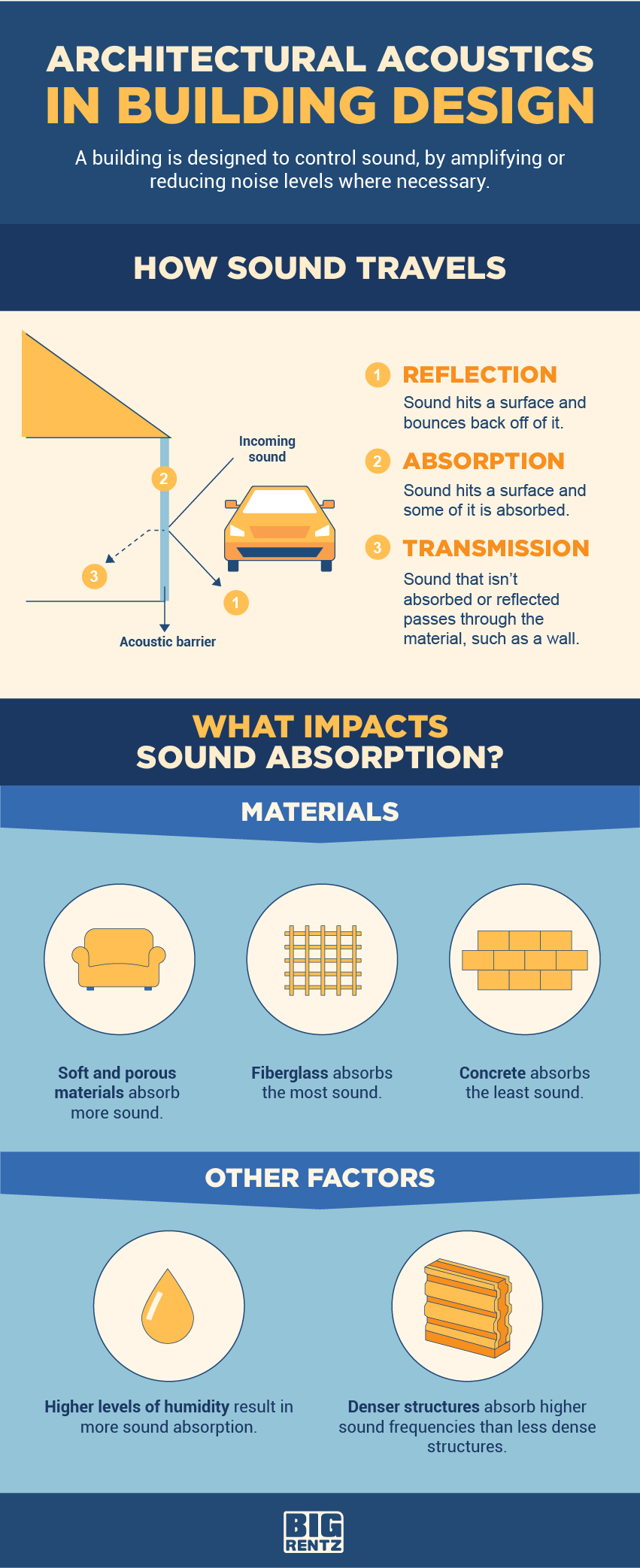
- High humidity levels create a sound-dampening effect.
- Dense materials are better at absorbing higher frequencies.
- A rectangular room is the optimal shape for acoustics (with a length-width ratio between 1.15 and 1.45).
Of course, not all of these aspects can be controlled. But, you should always try to understand the architectural acoustics of your sound space.
The features of a room impact the actual sound, but you can control most of those features to maximize your acoustics. Bring in furniture or acoustic panels to block off excess room areas. Or, place a humidifier into your sound area. We can’t change the architecture too much, but we can control the acoustics in other ways.
Recognize Your Space
Different rooms sound, well, different. From the size of the room, to the stuff you put in it, every change will impact the acoustics. Therefore, understanding the layout and composition of your recording room is essential.
Look for common key areas first. Low frequency sounds love corners. Use acoustic bass traps to soften the bass and even out your sounds. Likewise, too much glass can lead to excess reverberation. Cover your windows with acoustic boards or heavy drapes.
You will also need to consider what’s in your space. Large couches can deaden sound, reducing the need for additional sound treatment. Still, bare concrete walls can reflect up to 98% of sound. If that sounds like your recording space, invest in acoustic paneling for more sound absorption.
Some of us are limited by our actual space, but every area can be treated for specific audio needs. From bright recording areas to quiet spaces for mixing or streaming, all can be achieved even in what was once a bare, concrete basement.
When in Doubt, Do it Yourself
Let’s face it; acoustic treatment can be expensive. With a bit of hand’s-on labor, though most treatment options can be made by yourself.
First, ensure you understand the acoustic properties of sound-controlling materials. Carpet, foam padding, and fiber insulation are excellent at absorbing sound. And these materials can be used to create homemade acoustic panels of any shape and need.
Taking matters into your own hands can save hundreds of dollars. Plus, you can have more control over your sound settings by doing it yourself. For instance:
- Homemade acoustic boards and panels can be shaped to your specific needs (great for odd door and window placement).
- Bass traps can work around odd bulkheads or room construction.
- Create portable treatment options for a modular sound design (suited for recording and mixing).
By understanding the properties of acoustics, including sound absorption and reflection, you can create your own sound control. It may take time for your homemade treatments to look as nice as the pros. However, with smart acoustic design, they can have as much impact at a fraction of the cost.
Achieving the perfect sound is a tricky task. By understanding the acoustics of your recording area, you can maximize your chances. Use bass traps and acoustic panels to absorb bright reflections. Create your acoustic panels from foam padding and hang your own ceiling cloud. The possibilities are endless, so keep adjusting until you reach your perfect acoustic settings.
Rachel Perez is a classically trained singer and actor with 14 years of experience and a B.F.A. in Drama from New York University. She has performed in regional theaters of Orlando and New York City, as well as in theater internationally, such as in Florence, Italy. When not writing, she enjoys gardening with her mom and spending time in the Florida sunshine.


Keeping Track



LEAVE A COMMENT