How I learned to love Sushi

I used to hate sushi.
Cold, raw fish wrapped in seaweed and rice. Dipped into a black sauce with spicy green paste.
Gross.
This was really driving a wedge between me and my wife because she LOVES sushi.
I can just see us screaming at each other in front of a couple’s counselor:
“You said you didn’t care where we’d go eat!”
“But you never want to go to sushi!”
“I don’t like raw fish!”
“I don’t like you!”
And on and on it would go, my tastebuds being the true villain of the story.
Then we found a $300 round trip ticket from LA to Japan.
Guess what happened there?
Liz forced me to eat a lot of sushi.
Actually, she didn’t force me at all. I would be insane not to eat sushi in Japan. That’s like refusing to eat pasta in Italy, tapas in Spain, or putrified shark in Iceland.
Just kidding. Don’t eat the shark. It’s the worst thing you’ll ever try.
But after eating the sushi in Japan, I really grew to like it. It’s like when people say something is an “acquired taste.”
Well, I had been avoiding this particular acquisition for years now, and all I needed to do was go on a 12-hour flight and eat at the Tsukiji fish market to finally “acquire” this taste.
The simplicity of a good tuna on sticky rice with a touch of Wasabi is now a delicacy to me.
And now I’m really into it. So much so that I actually prefer the simpler Nigiri than the sometimes overcomplicated sushi rolls stuffed with a random assortment of foodstuffs.
And that’s true with mixing too. You don’t always have to overcomplicate your mixes with unnecessary processing.
Simplifying your tracks and doing broad stroke processing on instrument groups is sometimes enough to bring out the character of the song.
Is there a time and place for complicated parallel processing, transient manipulation, and sound design? Sure, I do it all the time. I’m mixing an indie rock EP that has amp sims on the acoustic guitars, fuzzy saturation on the bass, slammed parallel compression on the drums and distortion on the vocals.
It’s one overstuffed sushi roll for sure!
But that’s not how I started the mix. I started by making it as simple as possible. I built the mix on a foundation of simplicity because that’s how I design my mix templates. If the mix needs to be simple, it’s easy enough to do. But if it needs to get rowdy and complex, I have all the effects busses, parallel processing chains, and plug-ins ready to go when I need them.
If you’d like to see my mix template in action, and learn to mix as simply or as complex as the song requires, check out the Mix Workflow video included with Step By Step Mixing and Better Mixes in Less Time bundle.
Here are a couple recent reviews for Step By Step Mixing that I’m super grateful for:

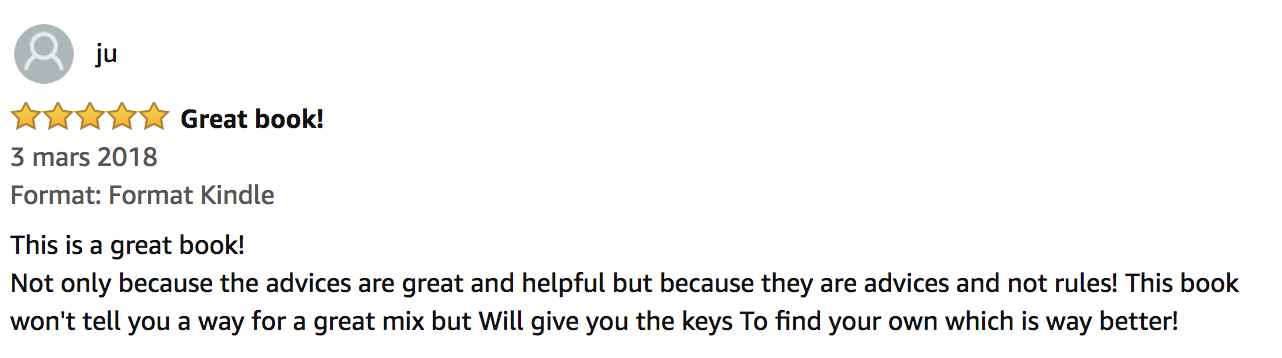

Check it out here:


Music Mixing



LEAVE A COMMENT