The Biggest Lie About EQ

The most annoying comment I see in the online audio forums is a variation of this nonsense:
“You should only use subtractive EQ and never boost more than 3 dBs”
This is…for a lack of a better term…absolute bullshit.
And I’m willing to fight anybody who follows this advice as gospel.

It’s just plain wrong because I’ve never seen a single professional mixing engineer be scared about the amount they’re boosting or cutting.
I’ve been using EQ for 15 years, working as a live sound engineer, a broadcast recording engineer, and a freelance mixing and mastering engineer.
And since 2009 I’ve been helping people like you turn your amateur demos into professionally produced records you can be proud to release.
The worst thing I see is when students are so indoctrinated with garbage advice like this that they get scared to approach their processors.
Take my student Isobel for instance. She’s a retired attorney from the U.K.
(I think they call them solicitors and/or barristers there…which are objectively more eloquent terms).
She’s been mixing her son’s symphonic metal album.
(Which obviously makes her mother of the century).
And the biggest leap she made with her mixes is when I told her to go overboard with her processing.
And when she stopped caring about arbitrary dB numbers and just cranked stuff up to eleven her mixes instantly improved.
i couldn’t believe the sound of the next mix she brought in. The guitars screamed out of the speakers and the drums hit you hard.
That’s what happens when you stop worrying about what you “should do” and just do whatever moves the needle of your mixes.
This “no-boost rule bullshit” WILL stand in the way of your mixes sounding better, which is why my Audio Issues EQ has an entire module dedicated to boosting the frequencies that enhance your mix.
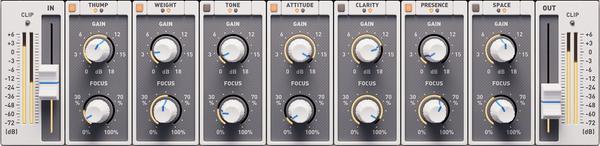
The bottom module is a boost-only additive EQ focused on the flattering frequencies that enhance the sound of your music.
You can switch between two different frequency characteristics in each one of the seven slots depending on your needs:
- Thump and Punch
- Warmth and Weight
- Tone and Power
- Attitude and Edge
- Bite and Clarity
- Presence and Brilliance
- Air and Space
Simply put, there’s no reason to fear the boost knob.
BUT…there is a process to it.
The thing to be aware of when you’re boosting a bunch is that you’re adding a LOT of gain to a very specific frequency area and that in turn will increase the overall volume of the track.
That’s why proper gain-staging through your plug-ins is so important.
And that’s why my plug-in has big input and output faders and a built-in frequency analyzer.
I want you to see what you’re adding to the frequency spectrum, but I also want to make sure you easily see how much gain you’re adding (or taking away with the top module).
EQ is simply a tone-shaping tool to help you achieve whatever results you’re hearing in your head and the Audio Issues EQ is the perfect companion to help you achieve those sounds.
Hundreds of people have grabbed it in the last few days and I’ve been showered with emails from my audience telling me how much they like it.
John over at 3003 Sound shared it on his Instagram account while he was mixing guitars:
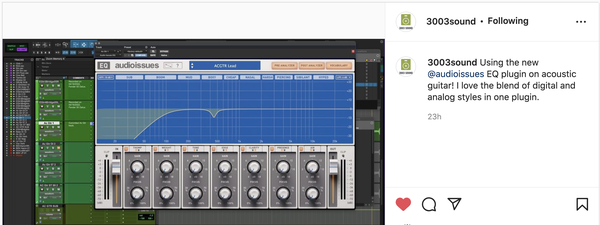
“I love the blend of digital analog styles in one plugin.” -John Owings, 3003 sound
So if you’re looking for an intuitive and instructive EQ tool that helps you make better EQ moves, the Audio Issues EQ is for you.
Click this link to grab your copy.


Music Mixing



LEAVE A COMMENT