The case for the lowly, casual stock EQ
I’m a big fan of wrist watches.
I own a few and I wear each one depending on what clothes I’m wearing.
I can’t wear a brown watch if my outfit is mostly black, and I can’t wear a black watch with all my light colors.
I guess I probably put too much thought into this but hear me out.
Many of these watches were expensive gifts; they were either christmas presents or birthday gifts.
I wear them when I need to actually look presentable.
But there’s one watch I wear at least half of the time. It’s usually my first choice and if I’m traveling that’s usually the watch I take with me.
It’s not of those expensive wristwatches I got as gifts.
Nope.
It’s my $16 watch from Sears.
I can wear it with shorts on the beach. Or I could wear it with a suit. It’s versatile and if it were to break I really wouldn’t care. It was only $16 and that’s pretty cheap for a watch.
My approach to EQ is the same way.
I have some of the Waves EQs(the V series is especially nice), and I also started using the FabFilter Pro-Q EQ. They’re really nice and fun to use.
But when I just need to do some quick boosts or cuts, do I twist the imaginary knobs of the VEQ3?
Nope.
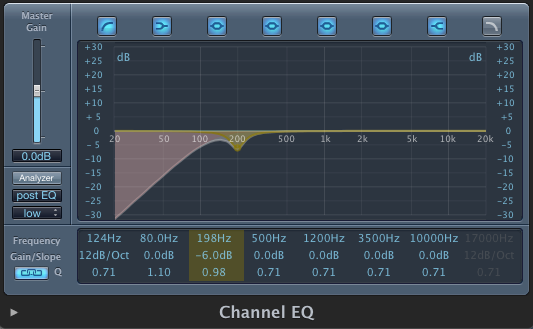
I just double-click on the EQ window and Logic’s stock Channel EQ pops up. Sure, it doesn’t have fancy analog modeling or frequency listening. But if I just need something done quickly and efficiently so I can finish my mix, my “cheap” stock EQ is my first choice.
If it’s just a quick cut to make the bass fit or a small matters that much. It’s knowing what you’re EQ’ing that matters, regardless of the type of plug-in you’re using.
Don’t get me wrong, I love my different EQs. Just like I love all my watches. But when I need something simple and fast, sometimes the simplest solution is the cheapest.
Speaking of EQ’ing, The Ultimate Guide to EQ is plug-in independent. That means it doesn’t matter whether you’re using the stock EQ that comes with your DAW, an expensive plug-in emulator or a fancy hardware Pulteq. All the tips in my guide help you EQ better, whatever the price tag of your EQ. And better EQ skills directly translate to better sounding mixes.
Click the link to check out my guide:
www.audio-issues.com/ultimate-guide-eq


Music Mixing



LEAVE A COMMENT