How the Polarity Button Can Be Your Best EQ Trick
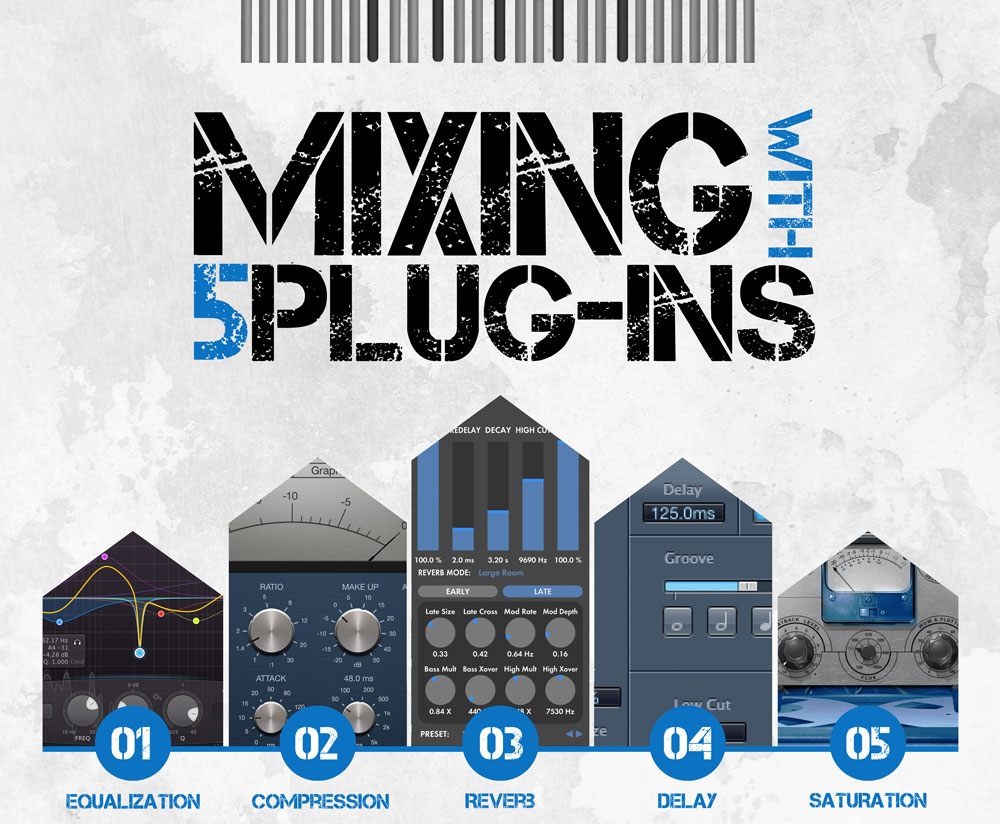
In whole second week on just EQ and making all the instruments fit into the mix.
There’s really only three things to work with on an EQ:
- Frequency
- Q
- Gain
You find the frequency, decide on how narrow or wide you want the Q and then you use the gain to either cut or boost.
Simple right?
The Q also goes hand in hand with your decision of whether you want to boost or cut as well. A narrow Q is usually used for repairing or cutting frequencies out of an instrument.
A broad Q is usually used to apply boosts. Add a big boost to a signal with a narrow Q and chances are you won’t like the result.
But there’s another button on some EQ plug-ins that goes unnoticed and it can make the biggest difference of all.
It’s the polarity switch!
Sometimes mistakenly called the “phase” button, this switch can really help tighten up your low-end, especially when you have multi-miked instruments such as drums and guitars.
It Even Helps Samples
In the multi-track to the each kick.
The kick isn’t exactly replaced. The samples just add to the rounded kick sound that was recorded so it adds more depth to the kick.
The general kick drum EQ guideline would be:
- Boosting the lows
- Cutting the boxy mids
- Adding snap to the beater.
But as I go through the EQ video and work on the kicks one of the biggest changes I make to the kick drum sound doesn’t have anything to do with that.
It has all to do with the polarity switch.
Because as soon as I flip the polarity switch on certain kick drum tracks the drum sound becomes thicker and tighter.
All because of one switch.
EQ Helps You Every Part of the Way
I don’t EQ the mix once in the course and leave it alone.
That’s not really how mixing works.
Mixing is a rebalancing act that requires you to adjust things as you go along.
Once you add more processors such as compression you’ll lose some frequency balance because of the way the compressors are now working on your mix.
At that point it’s time to EQ that back in. How I do it answers the age old question of “should I use EQ before or after compression?”
The answer will probably surprise you.
Furthermore, it’s not just for rebalancing. It’s present in every part of the process.
- When we add reverb we’ll need EQ
- When we use delays we’ll need EQ
- When we use saturation you’ll often end up with high frequency loss so you’ll need EQ
Think of it like your lightsaber on your journey as a heroic mixing engineer.
You might pick up more tips and tricks and powers of the force along the way but your lightsaber will always be there, trusty by your side.
 Come join us inside the Mixing With 5 Plug-ins community and get started with your journey.
We’ll pick up tricks such as:
- Keeping the mid-range in check so you don’t get boxy kick drums, honky guitars, muddy bass or nasally vocals.
- Rebalancing your EQ after compression to keep everything going smoothly.
- The incredibly important aspect of how and why to EQ your reverbs for a cleaner mix
- How to saturate your kick drum to give your low-end more thickness and weight
Join here:


Music Mixing



LEAVE A COMMENT